Key points
- HPE employees build no-code apps on monday.com to replace manual reporting and executive status meetings.
- Admins train users first and allocate separate AI credits to manage adoption pace at the company.
- Custom dashboards export to PowerPoint to accommodate leaders who prefer traditional slide decks for reviews.
Hewlett Packard Enterprise staff use monday.com’s platform to build custom applications that reduce the need for executive status meetings, according to a report by SiliconANGLE.reported The company’s approach focuses on enabling employees closest to the work to create these tools themselves.
Evidence: reported
HPE cuts executive status meetings with no-code apps built on monday.comaifleet-siliconangle
The claim
Kate Kenner, capability and community lead for strategic sourcing and planning at HPE, stated that no-code apps deliver the most value when the people closest to the work build them. She described turning a single IT ticketing build, assembled in 24 hours, into a companywide practice of teaching colleagues to build their own workflows.reported Kenner emphasized that the product is easy to learn and requires little uplift for users to gain the skills needed to construct these solutions independently.
Evidence: reported
HPE cuts executive status meetings with no-code apps built on monday.comaifleet-siliconangle
The response
To manage the rollout of AI agents within the platform, HPE admins pace adoption by training users first. Kenner explained that the company gives groups separate AI credit allotments to balance creativity with control. She noted the difficulty of allowing enough allowance for employees to experiment without letting adoption spin out of control, describing the need to prevent a “wild west” scenario while encouraging hands-on engagement with the new technology.
What the evidence means
The material suggests that enthusiasm for AI is not the primary barrier. Research from monday.com and Nielsen, cited during the discussion, found that 72% of people work at companies that mandate or strongly encourage AI use, even as the processes around it lag.reported HPE’s strategy of separate credit allotments and training appears designed to address this gap between mandate and operational readiness.
Evidence: reported
HPE cuts executive status meetings with no-code apps built on monday.comaifleet-siliconangle
In practice
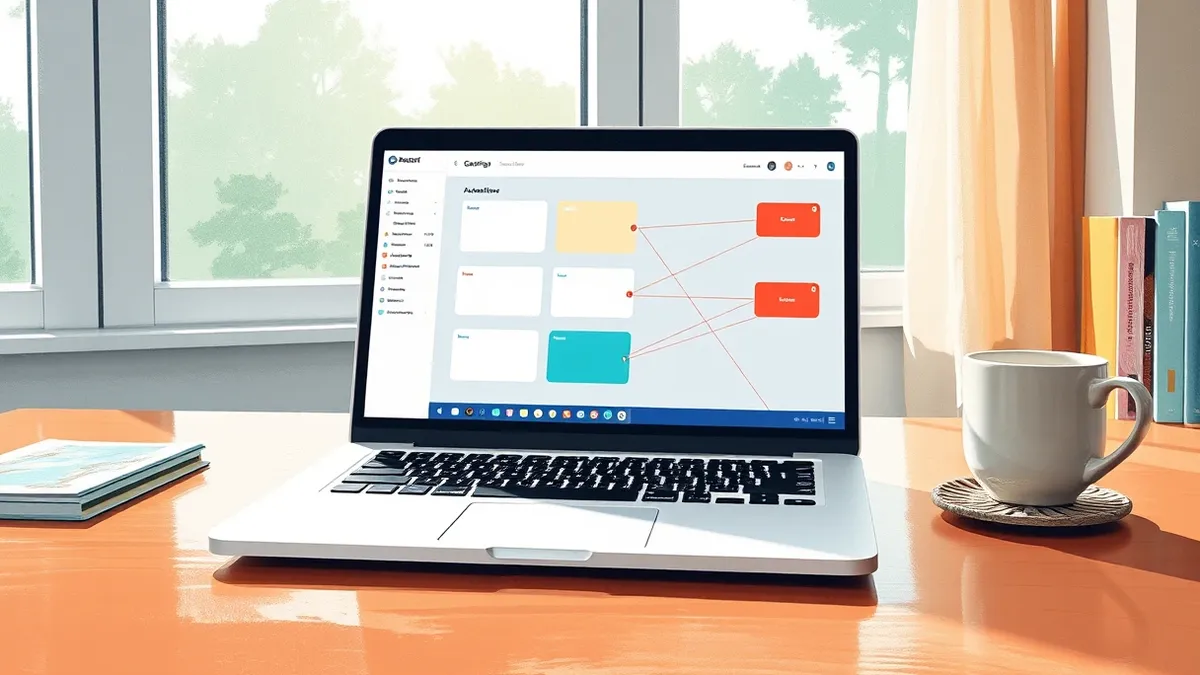
HPE staff use monday vibe, a no-code tool, to create custom applications. Kenner’s first app replaced the chore of pasting charts into slides with an executive dashboard. This dashboard can still export to PowerPoint for leaders who prefer a deck, addressing the difficulty of moving away from PowerPoint in corporate environments. The payoff showed up on the calendar as executive status meetings were cut.
Why it matters
- Enterprise IT buyers can see how training and credit limits help govern AI adoption without stifling user innovation.
- The ability to export no-code dashboards to PowerPoint addresses a common barrier to replacing legacy reporting tools.
- Shifting app building to end-users may reduce IT backlog, as seen in HPE’s 24-hour ticketing build.
- High mandate rates for AI (72%) suggest strong employee pressure for access, requiring clear governance frameworks.
Topics: monday.com, HPE, no-code, AI governance, enterprise software
Updated
Ask the article
Local keyword search of this article; no generated answers.Did this article give you the evidence you needed?
Your choice stays on this device. No public tally.Questions readers ask
How does HPE govern the use of AI agents on monday.com?
HPE admins train users first and provide separate AI credit allotments to balance creativity with control.
What is monday vibe?
It is monday.com’s no-code tool for creating custom applications, used by HPE to build executive dashboards.
Did HPE eliminate PowerPoint usage?
No, the custom dashboards can still export to PowerPoint for leaders who prefer traditional slide decks.
Connected stories
Reading receipt
- HPE employees build no-code apps on monday.com to replace manual reporting and executive status meetings.
- Admins train users first and allocate separate AI credits to manage adoption pace at the company.
- Custom dashboards export to PowerPoint to accommodate leaders who prefer traditional slide decks for reviews.