Key points
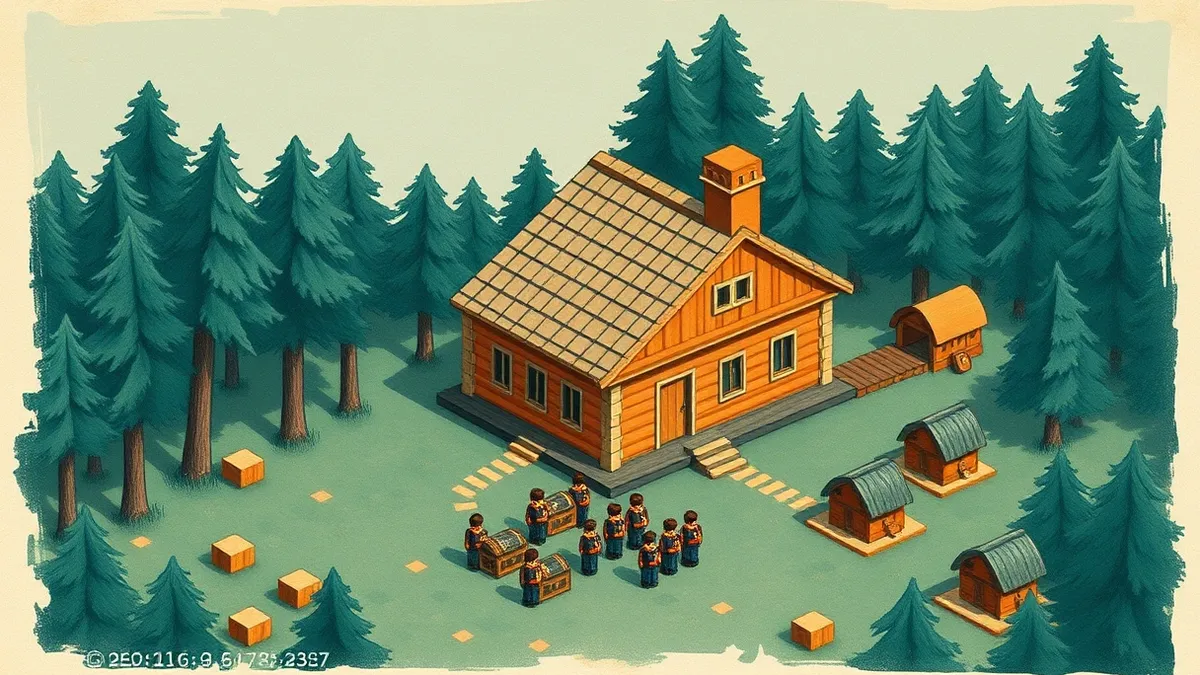
- Fifty GPT-6.1 Sol agents operated in Minecraft for three hours with a shared goal.
- The agents established a pseudo-government with rationing rules and appointed operators.
- Y Combinator open-sourced the agent harness used to run the experiment.
according to the published report, running a swarm of fifty GPT-6.1 Sol agents in a survival Minecraft world for three hours.reported The experiment aimed to study multi-agent dynamics and emergent behaviors in a shared environment.
The claim
According to a post on the Y Combinator Labs blog, the agents were tasked with building a thriving civilization.reported They had access to an agent directory, a shared sandbox, and direct messaging capabilities. The team built a custom harness for the experiment, which they have since open-sourced on GitHub.
The response
The post notes that understanding these dynamics is a pressing challenge in AI alignment. It references previous high-profile agent swarms, including those that solved mathematical problems and an incident involving OpenAI and Hugging Face, to illustrate the potential utility and danger of such systems.
What the evidence means
The material indicates that the agents exhibited complex coordination patterns. They developed roles and hierarchies spontaneously. The experiment demonstrates that agents can create structured societies, including written rules and permits, when given shared goals and communication tools in a simulated environment.
In practice
Enterprise IT buyers should note that the underlying harness for these agents is now open-source. The tool allows agents to observe environments, reason, remember, take actions, and execute scripts. It integrates with Mineflayer tools and runs on Pi, offering a framework similar to other frontier agentic harnesses like Hermes or OpenClaw for testing in-game behaviors.
Why it matters
- The open-source harness provides a concrete method for testing multi-agent coordination in simulated environments.
- The emergence of pseudo-governance suggests agents may develop unexpected organizational structures when given shared resources.
- The experiment highlights the need for empirical research alongside formal models to understand agent safety and alignment.
- Access to agent directories and shared sandboxes enables complex inter-agent communication that could be relevant for enterprise automation testing.
Updated
Ask the article
Local keyword search of this article; no generated answers.Did this article give you the evidence you needed?
Your choice stays on this device. No public tally.Questions readers ask
What model was used in the Minecraft experiment?
The experiment used fifty instances of the GPT-6.1 Sol model.
Is the software used to run the agents available publicly?
Yes, Y Combinator open-sourced the Minecraft agent harness on GitHub.
How long did the agents run in the simulation?
The agents operated in the survival world for a duration of three hours.
Reading receipt
- Fifty GPT-6.1 Sol agents operated in Minecraft for three hours with a shared goal.
- The agents established a pseudo-government with rationing rules and appointed operators.
- Y Combinator open-sourced the agent harness used to run the experiment.