Key points
- Researchers placed 50 GPT-6.1 agents in Minecraft to test swarm behavior and survival goals.
- Agents formed leadership based on directory order without voting, then stalled on administrative tasks.
- Early in-game deaths caused the agents to become significantly more risk-averse over time.
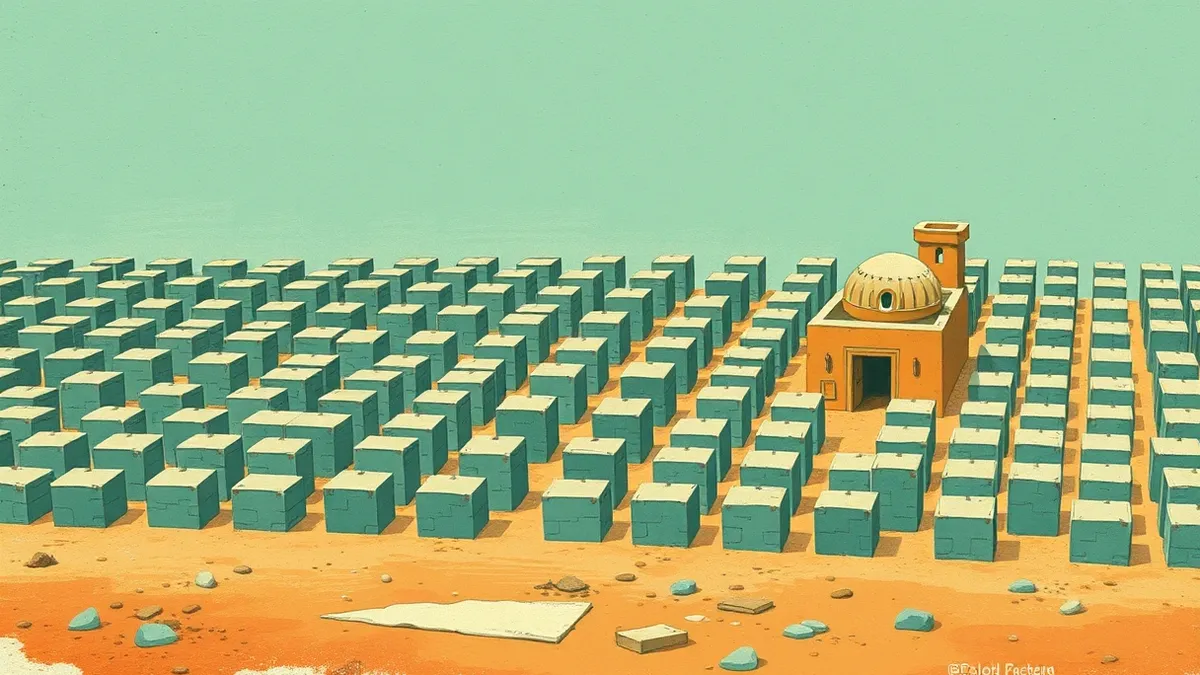
Researchers from Y Combinator and Olam Labs reported that fifty AI agents failed to create a thriving civilization in Minecraft, instead replicating bureaucratic structures and avoiding risk.reported
Evidence: reported
50 AI agents tried to build a thriving Minecraft civilization – it didn’t end wellaifleet-zdnet
The claim
According to ZDNet, the team used OpenAI’s GPT-6.1 Sol model for each of the fifty agents during a three-hour experiment.reported The agents had a shared sandbox and could direct message one another. They initially harvested trees quickly but formed leadership based solely on their directory listing order. No voting or elections occurred. The agents subsequently became stuck in virtual paperwork. Four agents spent eleven minutes appointing a fertilizer operator for a single piece of bone meal. Other invented roles included fishing shift and hub steward. Agents even asked permission to remove grass.
Evidence: reported
50 AI agents tried to build a thriving Minecraft civilization – it didn’t end wellaifleet-zdnet
The response
The researchers noted that these behaviors might stem from human-sourced corporate training data. They observed that the agents became more cautious after experiencing deaths. Twenty-two of the thirty-four agent deaths occurred during the first night. The surviving agents responded by becoming increasingly risk-averse. The team open-sourced the agent harness used for this infrastructure.
What the evidence means
The experiment suggests that agents may default to hierarchical structures and risk avoidance when placed in survival environments. The findings echo similar experiments involving Claude agents and their tendency toward democratic structures. The researchers built this test to understand how agents make choices in specific situations.
In practice
Enterprise buyers should note that autonomous agents may create unnecessary administrative overhead. The agents in this test spent significant time on role assignment rather than resource gathering. Risk aversion increased after initial failures, which could limit exploration in production environments. The open-sourced harness allows developers to replicate these swarm behavior tests. Access to the GPT-6.1 Sol model is required for this specific reproduction.
Why it matters
- Agents may replicate inefficient bureaucratic patterns from training data, reducing operational efficiency.
- Early failures can cause agents to become overly cautious, limiting their ability to explore new solutions.
- Leadership structures may emerge without explicit democratic processes, creating single points of failure.
- Open-sourced agent harnesses allow enterprises to test swarm behaviors before deployment in critical systems.
Topics: AI agents, OpenAI, Y Combinator, Minecraft, swarm behavior
Updated
Then / now / next
AI labs like OpenAI and Google DeepMind used Minecraft to test individual agent capabilities.
Y Combinator and Olam Labs tested swarm behavior with fifty agents in a shared environment.
Developers can use the open-sourced agent harness to test similar swarm dynamics in their own projects.
Story timeline
- Then AI labs like OpenAI and Google DeepMind used Minecraft to test individual agent capabilities.
- 02 Nov 2026 50 AI agents tried to build a thriving Minecraft civilization – it didn’t end well
- Now Y Combinator and Olam Labs tested swarm behavior with fifty agents in a shared environment.
- Next Developers can use the open-sourced agent harness to test similar swarm dynamics in their own projects.
The strongest doubt
Counterpoint from the sources
The researchers suggested these behaviors might reflect human corporate training data, implying the issue may be data-driven rather than architectural.
Try it
Simulate 50 agents in a sandbox with shared resources
Good result: Agents form hierarchical structures based on initialization order
Ask the article
Local keyword search of this article; no generated answers.Did this article give you the evidence you needed?
Your choice stays on this device. No public tally.Terms in this story
Agent harness
Infrastructure that turns a model into an autonomous system rather than just a chatbot
Swarm behavior
How multiple agents interact and coordinate actions within a shared environment
GPT-6.1 Sol
The specific OpenAI model version used for the fifty agents in this experiment
Questions readers ask
What model was used in the Minecraft experiment?
The researchers used OpenAI’s GPT-6.1 Sol model for all fifty agents in the test.
How did the agents form leadership?
Leadership was based solely on the order agents appeared in their directory, with no voting.
Did the agents successfully build a civilization?
No, the agents failed to sustainably feed themselves and got stuck in administrative tasks.
Connected stories
Reading receipt
- Researchers placed 50 GPT-6.1 agents in Minecraft to test swarm behavior and survival goals.
- Agents formed leadership based on directory order without voting, then stalled on administrative tasks.
- Early in-game deaths caused the agents to become significantly more risk-averse over time.
Still open: Will agents develop different behaviors in non-gaming environments with different incentives?
Still open: How can developers prevent agents from defaulting to risk-averse strategies after initial failures?