Key points
- Jan von Plato used Claude to digest 1,009 pages of Gödel's notebooks in September.
- The AI revealed hundreds of proved theorems and 14 unpursued logic themes.
- Manual progress was about one page per week before the AI intervention.
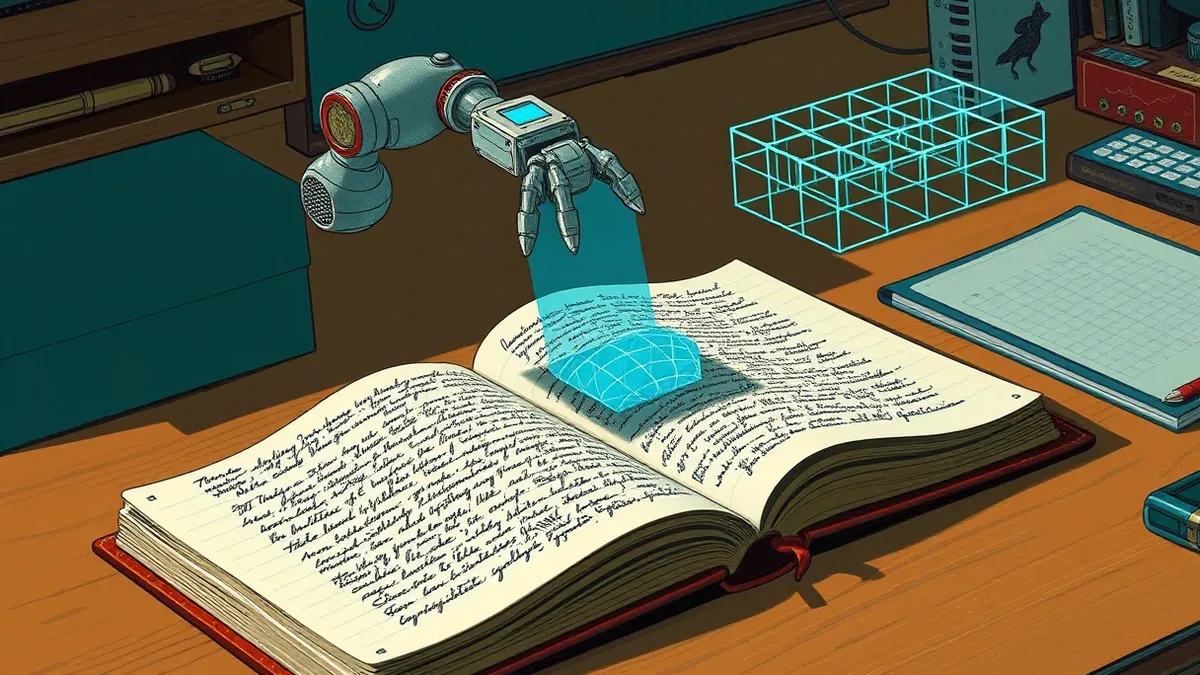
Jan von Plato reported that the AI model Claude provided a comprehensive digest of Kurt Gödel’s 16 notebooks within days, according to the published report This rapid processing revealed hundreds of proved theorems that historians had not previously identified in the dense text.reported
Evidence: reported
AI unlocks Gödel's notebooks, said to contain hundreds of proved theoremsaifleet-hn-ai
The claim
The Finnish logician led a project at Helsinki University starting in 2017 to understand Gödel’s workbooks from the early 1940s.reported The material consists of 1,009 pages of densely written text about mathematics and logic. Much of the content is written in Gabelsberger, a German shorthand system that was already obsolete when Gödel used it.
Evidence: reported
AI unlocks Gödel's notebooks, said to contain hundreds of proved theoremsaifleet-hn-ai
The response
Von Plato stated he was flabbergasted by the results. The analysis also identified 14 themes in logic that have not been pursued, suggesting Gödel was far ahead of his time.reported
Evidence: reported
AI unlocks Gödel's notebooks, said to contain hundreds of proved theoremsaifleet-hn-ai
What the evidence means
Before September, progress in understanding the text was painfully slow, averaging about one page per week. The AI intervention accelerated this process significantly, allowing for a complete review of the material in a matter of days.
In practice
The documented access relied on feeding the text to Claude, which generated a digest. Availability is tied to the model’s capability to interpret the specific material. The source does not state general limitations or transcription requirements for this process. The case demonstrates AI utility in deciphering dense, specialized technical documents for a specific researcher.
Why it matters
- AI models can accelerate historical research by processing obsolete formats faster than humans.
- The finding of 14 unpursued logic themes suggests new areas for academic investigation.
- The speed difference between manual and AI processing is significant.
- This case demonstrates AI utility in deciphering dense, specialized technical documents.
Updated
Then / now / next
Researchers processed Gödel’s notebooks at a rate of one page per week.
Claude digested the entire 1,009-page collection in a couple of days.
Historians may pursue the 14 unpursued logic themes identified in the notebooks.
Story timeline
- Then Researchers processed Gödel’s notebooks at a rate of one page per week.
- 13 Nov 2026 AI unlocks Gödel's notebooks, said to contain hundreds of proved theorems
- Now Claude digested the entire 1,009-page collection in a couple of days.
- Next Historians may pursue the 14 unpursued logic themes identified in the notebooks.
Ask the article
Local keyword search of this article; no generated answers.Did this article give you the evidence you needed?
Your choice stays on this device. No public tally.Questions readers ask
How many pages did the AI process?
The AI processed 1,009 pages of densely written text from Gödel’s notebooks.
What shorthand was used in the notebooks?
The notebooks were written in Gabelsberger, an obsolete German shorthand system.
How fast was the manual progress before AI?
Manual progress was about one page per week before the AI intervention.
Reading receipt
- Jan von Plato used Claude to digest 1,009 pages of Gödel's notebooks in September.
- The AI revealed hundreds of proved theorems and 14 unpursued logic themes.
- Manual progress was about one page per week before the AI intervention.