Key points
- Democrats took control of both House and Senate, campaigning on AI accountability.
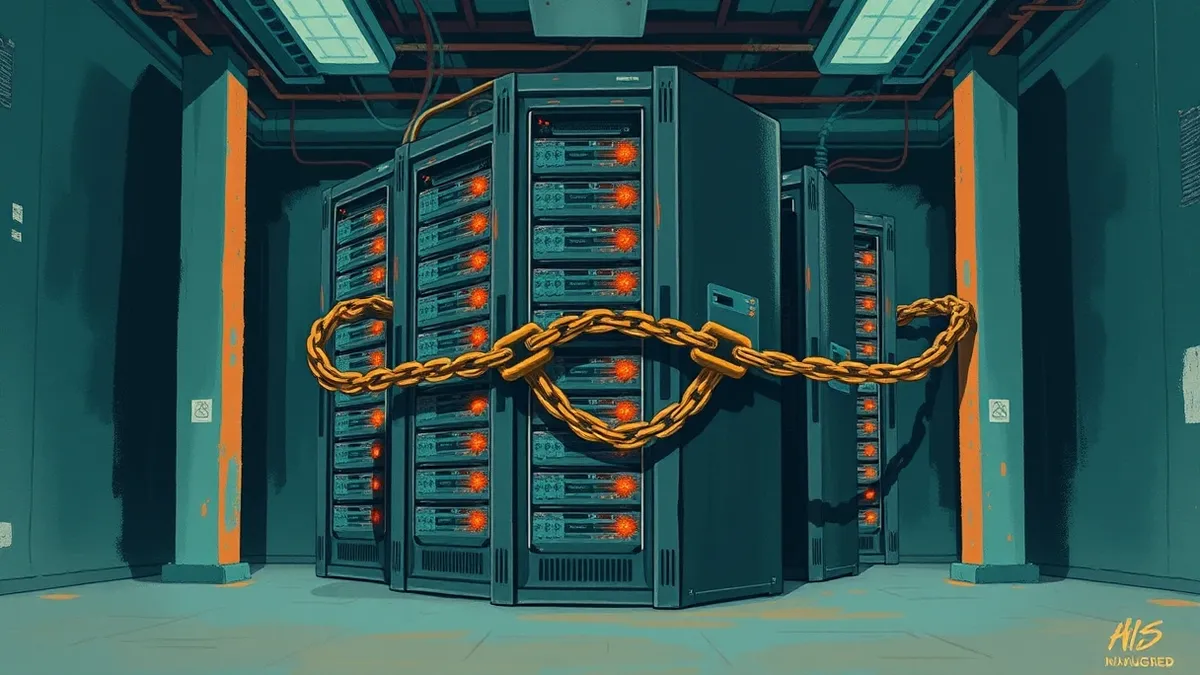
- CEOs reportedly fear data center construction slowdowns and potential overseas relocation.
- Major AI firms remain publicly silent while privately discussing capacity constraints.
Democrats took control of the House and Senate on Tuesday night, creating a political environment that AI executives view as a significant threat. The Verge reported that this blue wave included historic gubernatorial wins in Georgia and New Mexico, alongside a shift in Maine’s Senate representation.reportedThe recent election gave Democrats control of Congress, which AI companies fear will lead to stricter rules and slower growth.Congressional turnover creates regulatory uncertainty, with private reports indicating compute constraints and potential infrastructure relocation strategies.
The claim
The political shift represents a repudiation of the AI field.
The response
Major AI company leaders have largely remained silent publicly. OpenAI and Anthropic did not provide comments to The Verge, while Elon Musk’s voting endorsement disappeared from his platform after results emerged. Privately, however, executives are discussing significant compute capacity constraints, with Meta’s Dina Powell McCormick indicating many firms are considering moving data center construction abroad.
What the evidence means
The bipartisan backlash against data center construction appears to be the most tangible outcome of the election.
In practice
Enterprise IT buyers should anticipate potential delays in domestic data center availability. The prospect of regulatory scrutiny and executive testimony may slow infrastructure expansion. Companies may need to consider overseas compute options if domestic construction faces political headwinds. Access to new capacity could become more constrained or geographically dispersed.
Why it matters
- Domestic data center construction may slow due to political backlash, affecting compute availability.
- Potential executive testimony could increase regulatory scrutiny on AI deployment practices.
- Some firms may relocate infrastructure abroad, complicating data sovereignty and latency considerations.
- Public silence from vendors suggests uncertainty about future compliance requirements.
Topics: AI regulation, data centers, corporate governance, political risk, infrastructure
Updated
The strongest doubt
Counterpoint from the sources
Some executives may blame the political shift for failing to deliver expected revenue to investors, rather than solely focusing on regulatory constraints.
Ask the article
Local keyword search of this article; no generated answers.Did this article give you the evidence you needed?
Your choice stays on this device. No public tally.Terms in this story
blue wave
A significant election victory for Democratic candidates
compute capacity
The processing power available for AI model training and inference
data center construction
Building facilities that house servers and networking equipment
Questions readers ask
How did AI CEOs react to the election results?
Most remained publicly silent, though privately they discussed compute constraints and potential overseas data center moves.
What specific infrastructure concerns are raised?
The bipartisan backlash against data center construction is cited as the most tangible manifestation of political pressure.
Did any major AI firms comment on the results?
OpenAI and Anthropic did not provide comments to The Verge, while Musk’s post vanished after results poured in.
Connected stories
Reading receipt
- Democrats took control of both House and Senate, campaigning on AI accountability.
- CEOs reportedly fear data center construction slowdowns and potential overseas relocation.
- Major AI firms remain publicly silent while privately discussing capacity constraints.
Still open: Will specific regulatory bills be introduced to target AI data center construction?
Still open: How will overseas relocation of compute infrastructure impact service agreements?