Key points
- San Jose State University recorded over 11,000 searches on Finnish music in a single day.
- One library director says bot traffic sometimes causes sites to go down completely.
- Libraries describe the activity as extractive, using public resources for commercial AI models.
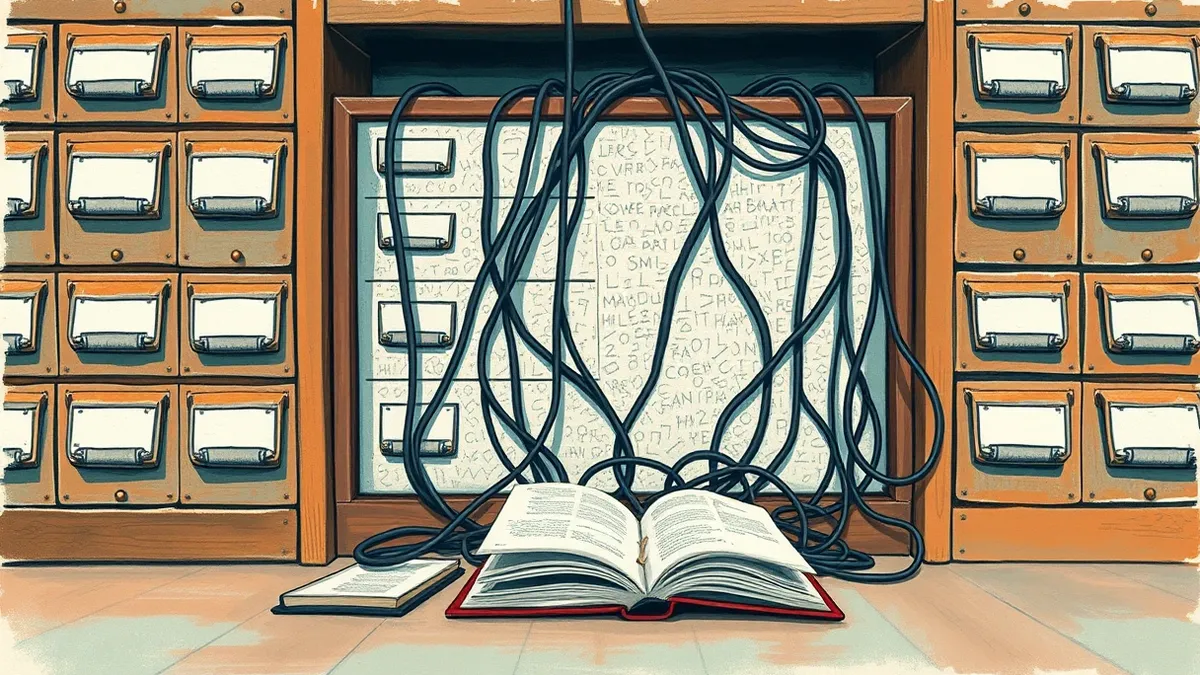
University libraries are reporting that automated bots are overwhelming their servers, disrupting access for legitimate users. This activity, attributed to data scraping for large language models, has led to site slowdowns and crashes at multiple academic institutions.Automated programs are clogging university library websites, making it hard for people to find information.High-volume automated requests for LLM training data are degrading the availability of public academic repositories.
The claim
Academic libraries state that persistent streams of unruly bots are knocking entire collections offline. Jill Strykowski, cataloguing lead at San Jose State University, told CBC News that bots bombard sites to grab material. One school reported more than 11,000 searches on Finnish music in just one day.reported
The response
Library directors describe the situation as creating a real problem for public access. Dean Seeman of University of Victoria Libraries noted that bot traffic sometimes causes sites to go down completely. Peter Lewis of Ontario Tech University called the practice extractive, noting private companies use public institutions to produce commercial models.
What the evidence means
The material indicates the issue is worsening. Researchers found reports of these disruptions starting in late 2024 across North America, Europe and Oceania.reported Experts tell CBC News the problem continues to get worse, with new challenges arising as AI companies hunt for vetted content not behind paywalls.
In practice
Enterprise IT buyers should note that public data sources are becoming unstable due to scraping. Libraries are prime targets because their vetted information is openly available. Users now compete with infinite bot traffic, leading to intermittent availability. No specific mitigation tools or policy changes were confirmed in the source material.
Why it matters
- Public datasets may suffer from reduced availability and increased latency due to bot traffic.
- Institutions providing open access face operational burdens from managing unruly automated requests.
- The dynamic highlights a conflict between commercial AI data needs and public resource stability.
- Users relying on library archives for research may experience unexpected service interruptions.
Topics: AI scraping, academic libraries, LLM training, data access
Updated
Then / now / next
Academic libraries provided open access to vetted digital collections without significant interference.
Bot swarms are causing slowdowns and outages, limiting access for students and researchers.
The problem continues to get worse with new challenges arising, according to experts.
Story timeline
- Then Academic libraries provided open access to vetted digital collections without significant interference.
- 06 Nov 2026 University libraries are being swarmed by AI bots, putting public access at risk
- Now Bot swarms are causing slowdowns and outages, limiting access for students and researchers.
- Next The problem continues to get worse with new challenges arising, according to experts.
The strongest doubt
Counterpoint from the sources
None provided in source material.
Ask the article
Local keyword search of this article; no generated answers.Did this article give you the evidence you needed?
Your choice stays on this device. No public tally.Terms in this story
Large language models
AI systems trained on vast amounts of text data to generate human-like responses.
Data scraping
Automated extraction of data from websites, often using bots.
Vetted information
Content that has been reviewed and verified for accuracy by experts.
Questions readers ask
Which regions are affected by library bot swarms?
Reports have emerged from North America, Europe and Oceania since late 2024.
Are the bots causing complete outages?
Yes, one director says traffic sometimes causes sites to go down completely.
Who is responsible for the bot traffic?
The bots are used by AI and third-party companies to feed large language models.
Reading receipt
- San Jose State University recorded over 11,000 searches on Finnish music in a single day.
- One library director says bot traffic sometimes causes sites to go down completely.
- Libraries describe the activity as extractive, using public resources for commercial AI models.
Still open: What specific technical measures are libraries implementing to block these bots?
Still open: Will AI companies adjust their scraping practices to avoid disrupting public access?